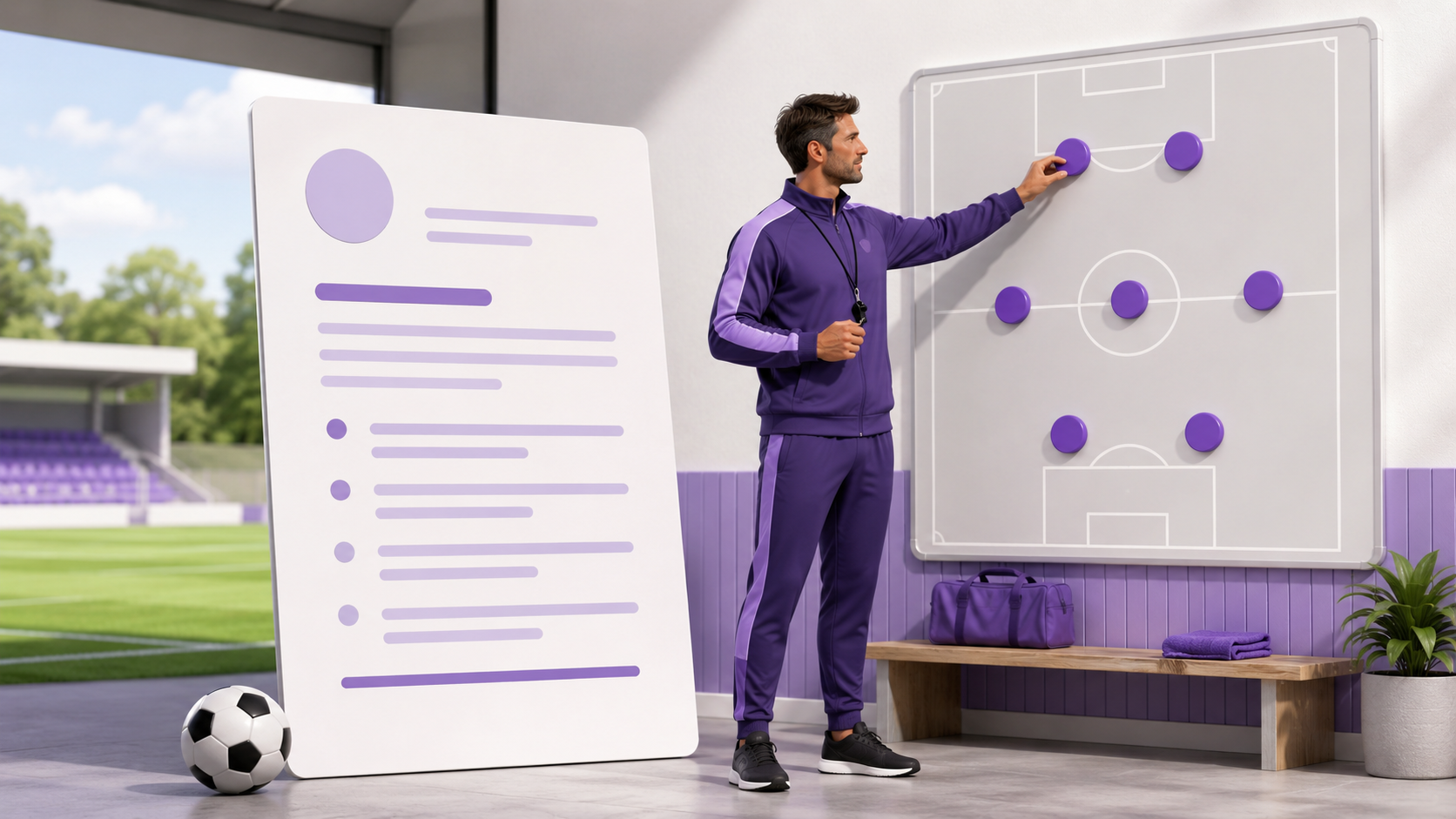

Resume for Soccer Coach: 7 Steps to Land Your Dream Job
A strong resume for soccer coach positions is your first step toward leading a team on the pitch. Whether you're applying for a youth academy, a semi-professional club, or a school program, your resume must show tactical knowledge, player development skills, and a track record of results. Recruiters spend less than 10 seconds on a first scan, so every line must earn its place. In this guide, we'll walk you through seven essential steps to craft a resume that gets you noticed and lands you the job.
Step 1: Understand the Role and Tailor Your Resume
Before you start writing, research the specific coaching position. A youth coach resume will emphasize player development and communication, while a semi-professional coach resume should highlight tactical analysis and performance metrics. Tailor your resume to the job description by using the same keywords and focusing on the most relevant experiences. For example, if the job posting mentions "possession-based play," include that phrase if it applies to your style.
Step 2: Write a Compelling Professional Summary
Start with a 3–4 line summary that states your coaching level, years of experience, and a standout achievement. This is your elevator pitch. For example: "UEFA B licensed coach with 8 years of experience developing youth players into senior team contributors. Increased team win rate by 35% over two seasons." Make it specific and results-oriented. Avoid clichés like "passionate about soccer"—show your passion through your achievements.
Step 3: Detail Your Coaching Experience with Impact
List roles in reverse chronological order. For each position, include the club or organization, your title, and dates. Under each role, use bullet points that start with action verbs and include numbers. Instead of "responsible for training," write "Designed weekly training sessions for 24 players, improving passing accuracy by 20%." Quantify your impact wherever possible. For instance, "Led under-17 squad to regional finals, a 40% improvement in league standing." If you've worked with individual players, mention specific outcomes: "Mentored three players who earned college scholarships." This shows you can develop talent, not just manage a team.
Step 4: Highlight Licenses and Education
Coaching credentials matter. List your licenses (e.g., UEFA C, B, A, or national equivalents) with the issuing body and year. Add any relevant degrees in sports science, physical education, or related fields. If you have additional certifications like first aid or safeguarding, include them—they show you're prepared for all aspects of the job. Place this section prominently, especially if you're early in your coaching career.
Step 5: Optimize for Applicant Tracking Systems (ATS)
Many clubs and schools use applicant tracking systems (ATS) to filter resumes. To pass the first screen, use a clean, single-column layout without tables or graphics. Include keywords from the job posting, such as "player development," "match analysis," "tactical periodization," and "injury prevention." Don't use headers or footers for critical information—ATS may miss them. Save your resume as a .docx or .pdf, but check the job posting for preferred format.
Step 6: Showcase Soft Skills and Leadership
Coaching is about more than tactics. Communication, motivation, and conflict resolution are essential. Provide examples of how you've used these skills. For instance, "Resolved a conflict between two senior players, restoring team harmony and improving on-field cooperation." Or "Implemented a mentorship program pairing experienced players with rookies, reducing player turnover by 25%." These stories demonstrate your ability to manage people, not just plays.
Step 7: Avoid Common Mistakes
One frequent error is treating a coaching resume like a playing resume. Your own playing career is secondary unless it directly supports your coaching credibility. Another mistake is listing every drill you know. Focus on results and leadership. Don't ignore soft skills—they're often what set candidates apart. Finally, proofread carefully. Typos and grammatical errors can make you look unprofessional. Related reading: Soccer Coaching Resume: 7 Steps to Land Your Dream Job Related reading: How to Write a Chickfila Resume That Gets You Hired Related reading: School Bus Driver Resume: 7 Steps to Land Your Dream Job in... Related reading: Resume ID: The Key to Professional Identity in Modern Job Ap... Related reading: Marketing Intern Resume Keywords That Get You Hired Related reading: Taurus Login: How to Access Your Resume Builder Account Related reading: How to Write a Canadian Resume for Jobs in 2026: Format, No-...
Real-World Example: Resume for Soccer Coach
Here's a sample bullet point from a successful resume: "Developed a periodization plan for a semi-professional team, reducing injuries by 30% and improving late-season performance, leading to a 2nd place finish in the league." Notice the specific numbers and outcomes. Use this as a model for your own bullets.
For more resume guidance, check out our Soccer Coach resume example and our article on What Makes a Good Resume (Key Elements).
Frequently Asked Questions
What certifications should I list on a resume for soccer coach?
List all relevant licenses such as UEFA C, B, A, or national federation equivalents. Include first aid and safeguarding certifications if you have them. If you're applying for a youth coaching role, a child protection certification can be a plus.
How long should a soccer coach resume be?
For most coaching roles, one to two pages is standard. If you have over 10 years of experience, two pages is acceptable. Keep the most relevant information on the first page. Use concise bullet points and avoid lengthy paragraphs.
Can I include volunteer coaching experience?
Yes, especially if you are early in your career. Volunteer roles demonstrate commitment and hands-on experience. Treat them like paid positions—quantify your impact. For example, "Volunteer assistant coach for U-12 team, helped improve team's passing accuracy by 15% over one season."
Should I include a photo on my resume for soccer coach?
In most English-speaking markets, avoid photos to prevent bias and ATS issues. Check local norms if applying abroad. Focus on content. If a photo is required, use a professional headshot.
Ready to create your own standout resume? Use our ATS resume checker to see how your current resume scores, then Build your Resume now with Taurus ID.

Talent Acquisition Expert
Emily has reviewed thousands of applications as a senior recruiter and now shares insider knowledge on what makes candidates stand out.